
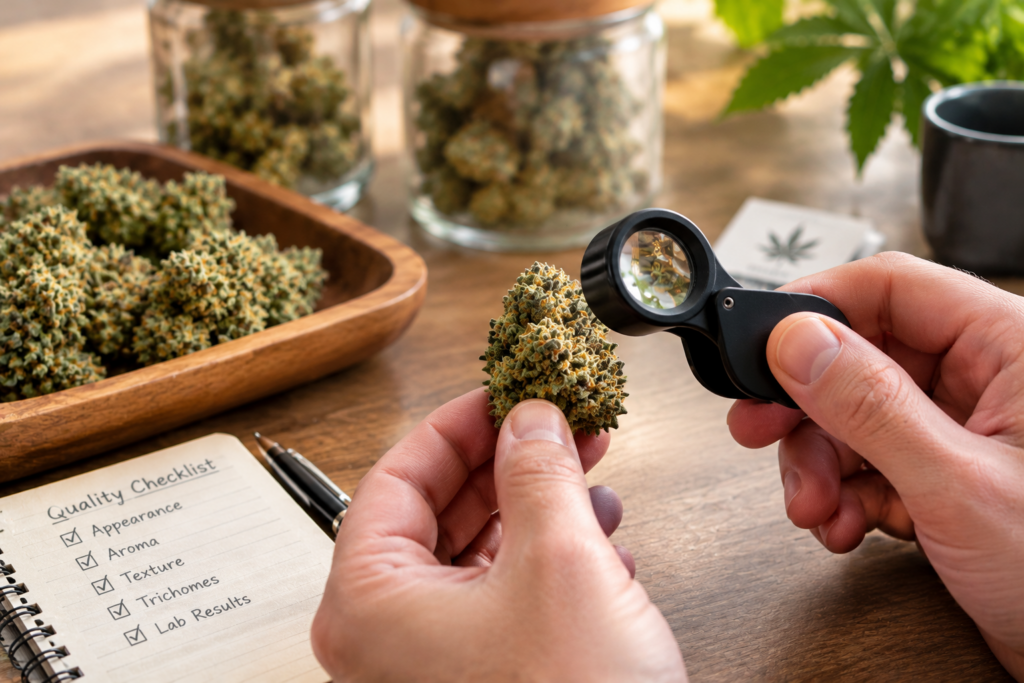
Not all THCA flower is created equal. Two jars can carry the same potency number on the label and deliver completely different experiences, because quality is about far more than one percentage. Learning to read flower is the skill that separates a satisfying purchase from a disappointing one.
This guide walks through what actually signals good THCA flower, from appearance to lab reports, so you can shop with a trained eye. If you want real examples to compare against as you read, the ELYXR flower and dabs collection is a useful reference.
Start With the Lab Report
Before anything else, a quality THCA flower comes with a current certificate of analysis. This document is the single most important quality signal, and a brand that hides it is telling you something.
The lab report confirms the THCA percentage, verifies the Delta-9 THC stays under the legal 0.3 percent limit, and screens for contaminants like pesticides, heavy metals, mold, and residual solvents. A clean report dated within the last year is the baseline. No report, or a vague one, is a reason to walk away no matter how good the flower looks.
What Good Flower Looks Like
Quality flower has structure and color. Look for dense, well-formed buds with a healthy green base, often accented by purple, orange, or amber depending on the strain.
Avoid flower that looks brown, washed out, or crumbled into dust. A frosty coating is a strong positive sign. Those tiny crystals are trichomes, the resin glands where cannabinoids and terpenes concentrate. The more visible, sticky frost on the bud, the more potent and flavorful it tends to be. Flat, dull buds with little visible resin usually deliver a flat, dull experience.
The Smell Test
Aroma is one of the most reliable quality cues. Fresh, high-quality flower has a strong, complex smell, whether that reads as citrus, pine, fuel, fruit, or earth.
A faint or hay-like smell suggests old flower or a poor cure. A harsh, grassy, or moldy odor is a clear warning sign. The intensity and complexity of the aroma come from terpenes, the same compounds that shape flavor and round out the effect, so a rich smell usually predicts a richer overall experience.
Potency in Context
THCA percentage matters, but it is not the only thing that matters. Strong flower typically tests somewhere in the high teens to high twenties for THCA.
Here is the nuance most buyers miss. A bud testing slightly lower in THCA but rich in terpenes often delivers a better, more rounded experience than a higher-percentage bud with no aroma or character. Chasing the single biggest number on the shelf is a common beginner mistake. Balance potency against freshness, smell, and appearance rather than treating the percentage as the whole story. If you want to compare potency across products, the ELYXR THCA collection lists lab figures alongside each option.
Check the Moisture and Cure
A proper cure makes a huge difference. Quality flower should feel slightly sticky and spongy, springing back a little when gently squeezed.
Flower that is bone dry and crumbles to powder was poorly cured or is simply old, and it will smoke harsh with muted flavor. On the other end, flower that feels damp or spongy-wet risks mold and should be avoided. The right moisture level is a quiet but reliable sign that the grower knew what they were doing.
Look for Seeds and Stems
Premium flower is well trimmed, with few stems and no seeds. A jar heavy with stems means you are paying flower prices for material you will throw away.
Seeds are a sign of a stressed or poorly managed grow and reduce the usable product. A clean, trimmed bud is both a quality signal and a better value, since more of what you bought is actually smokable.
Putting It All Together
The best approach is to weigh several signals at once rather than fixating on one. A strong lab report, frosty and well-structured buds, a rich smell, a proper cure, and clean trim together paint a far more accurate picture than any single percentage.
When several of these line up, you are almost always looking at flower worth buying. When several are missing, a high THCA number on the label will not save the experience.
Frequently Asked Questions
What THCA percentage counts as good flower?
Strong flower usually tests in the high teens to high twenties, but terpenes and freshness matter as much as the raw number.
How can I tell if THCA flower is fresh?
It should smell strong and complex, feel slightly sticky and spongy, and show visible resin. Dry, crumbly, faint-smelling flower is old.
Do I really need to check the lab report?
Yes. It confirms potency, legal Delta-9 levels, and that the flower is free of contaminants. Skipping it is a real risk.
Is higher THCA always better?
No. A balanced, terpene-rich bud often beats a higher-percentage one with no aroma or character.
What do trichomes tell me?
That frosty coating is where cannabinoids and terpenes concentrate, so more visible resin usually means more potency and flavor.
Wrapping It Up
Judging THCA flower is a skill you can learn in one shopping trip. Start with the lab report, then read the bud itself: structure and color, a frosty coat of trichomes, a strong complex smell, a proper slightly-sticky cure, and clean trim.
No single factor tells the whole story, so weigh them together and do not let one big percentage override everything else. When the signals line up, you are holding quality. The ELYXR flower and THCA ranges publish lab results for every product, which gives you the first and most important check before you ever open the jar.