
Most people assume fitness results come down to discipline. Train harder. Eat cleaner. Stick to the plan.
But anyone who has trained seriously knows this isn’t the full story. Two people can follow the same workout and the same diet and get completely different results. One gets lean and strong. The other feels exhausted, inflamed, or stuck.
That difference is not motivation. It’s physiology.
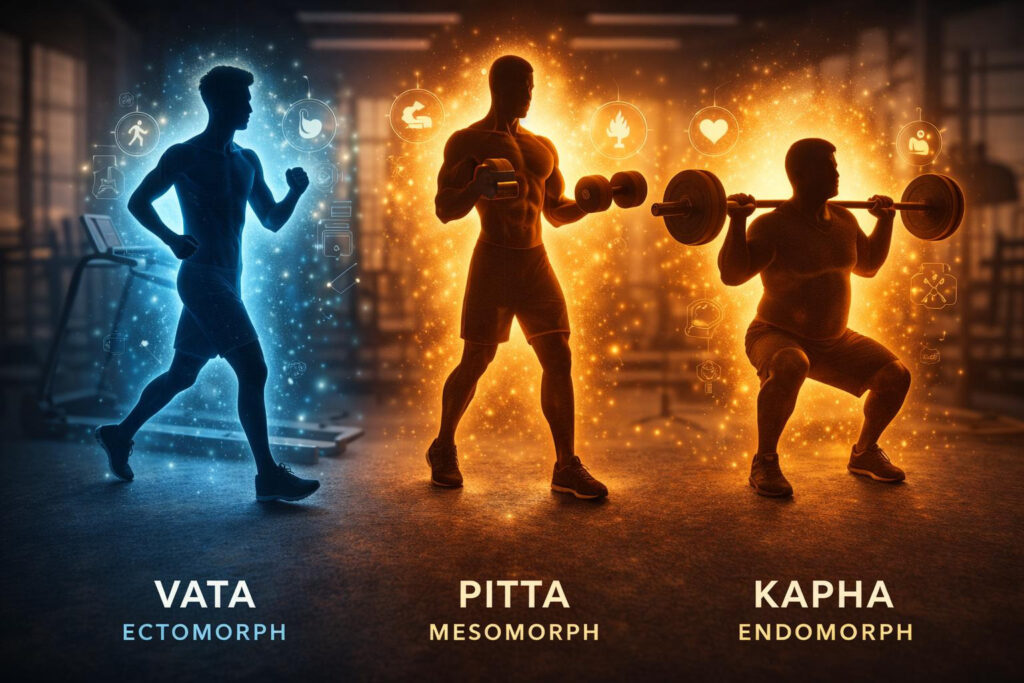
Modern fitness talks about ectomorphs, mesomorphs, and endomorphs. Long before those labels existed, Ayurveda described similar body patterns based on metabolism, structure, and energy use. When you line them up, the overlap is hard to ignore.
Why “One Fitness Diet” Rarely Works
Most fitness nutrition advice is built for averages. The problem is that real people aren’t averages.
Some bodies burn fuel quickly and crash just as fast. Others hold onto weight easily and need more stimulation to see results. Some thrive on intensity, while others break down from it.
Ancient systems paid attention to this. They didn’t ask, “Is this food healthy?” They asked, “Who is this food healthy for, and when?”
That question still matters.
Lean, Fast Bodies: Vata and the Ectomorph
If you are naturally lean, struggle to gain muscle, and feel wiped out when meals are missed, this pattern will feel familiar.
These bodies burn through energy quickly. They do best when fuel is steady and grounding. Skipping meals, relying on protein shakes alone, or eating mostly cold foods often leads to fatigue, poor recovery, and inconsistent performance.
What tends to work better is regular meals, enough carbohydrates to support training, and some healthy fats to stabilize energy. Warm, cooked foods are often better tolerated than raw or cold meals.
Training wise, strength work with proper rest usually produces better results than excessive cardio. Recovery is not optional for this body type. It is part of the program.
Athletic, Intense Bodies: Pitta and the Mesomorph
If you build muscle easily, respond well to training, and enjoy pushing hard, you likely fall into this category.
These bodies are efficient and driven. They often perform well quickly, which can be a double-edged sword. Overtraining, inflammation, and burnout are common issues here.
Fuel needs tend to be balanced. Enough protein to support muscle repair, enough carbohydrates to sustain performance, and plenty of hydration. When this body type goes too heavy on stimulants, spicy foods, or aggressive cutting diets, performance usually suffers.
Structured training works well, but rest days and cooling strategies are important. Progress comes from consistency, not constant intensity.
Solid, Enduring Bodies: Kapha and the Endomorph
If you have a sturdier build, good endurance, and find it easier to gain weight than lose it, this pattern may resonate.
These bodies are strong and resilient, but they can feel sluggish without the right stimulation. Heavy meals, late-night eating, and overly rich foods tend to slow progress.
Fueling works best when meals are lighter, warming, and well-timed. Protein intake is important, but portions matter. This body type often benefits from reducing constant snacking and eating later in the day.
Training needs to be consistent. Once momentum builds, endurance and strength can be impressive. The key is avoiding long breaks that lead to stagnation.
Fitness Is a Feedback Loop

Food is not just calories. It is information. The body responds to what you give it, and different bodies interpret the same input differently.
This is why copying someone else’s diet or workout plan so often fails. It ignores the system receiving the input.
Understanding body type does not mean boxing yourself in. It means starting from a smarter baseline.
This perspective is why many people explore structured learning such as CureNatural’s ayurveda training courses, which translate body-type principles into practical guidance for nutrition, fitness, and lifestyle without abandoning modern understanding.
The Bottom Line
Good fitness programs respect differences. They do not force every body into the same template.
When fuel matches body type:
- Energy becomes steadier
- Recovery improves
- Training feels sustainable
- Results last longer
Ancient systems noticed these patterns through observation. Modern fitness is now circling back through data and experience.
Real fitness intelligence is not about doing more.
It is about doing what your body actually responds to.