
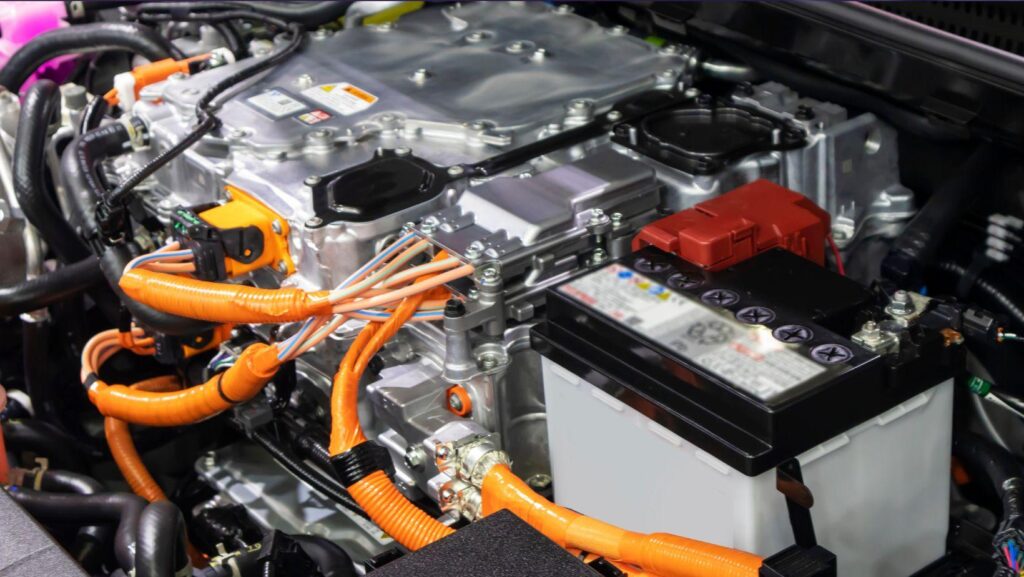
The rapid global transition toward electric mobility relies on high-energy-density lithium-ion battery packs. Storing enough chemical energy to propel a multi-ton vehicle hundreds of miles on a single charge requires placing thousands of individual battery cells into a compact, sealed pack beneath the cabin floor.
While lithium-ion batteries deliver exceptional power density and efficiency, they are highly sensitive to thermal fluctuations. Excessive heat severely degrades battery health, cuts charging speeds, and, in extreme cases, can trigger dangerous thermal runaway reactions. To keep battery packs operating within their ideal temperature window, electric vehicles rely on an intelligent electronic brain known as the Battery Management System (BMS).
Thermal Vulnerabilities and the Threat of Thermal Runaway
Lithium-ion cells function through electrochemical reactions, moving lithium ions between an anode and a cathode through a flammable liquid electrolyte. During rapid acceleration, high-speed highway cruising, or ultra-fast DC charging, high electrical current flows through internal cell resistance, generating heat according to Joule’s Law ($P = I^2R$).
If this internal heat builds up faster than it can escape the battery casing, the cell enters a self-sustaining heat loop:
Whether drivers are fast-charging on a road trip, commuters are navigating urban traffic, car enthusiasts are tracking EV performance, or passengers are checking notifications or visiting a web-based Casino BetNjet platform while riding along, the BMS works quietly in the background to keep internal battery temperatures stable.
|
BMS Safeguard Layer |
Hardware / Software System |
Primary Thermal Control Function |
|
Active Temperature Monitoring |
Distributed thermistor and NTC sensor arrays |
Continuously tracks individual cell and module temperatures in real time |
|
Active Liquid Cooling |
Glycol-water coolant channels and heat exchangers |
Pumps chilled fluid beneath battery modules to draw away excess heat |
|
Passive / Active Cell Balancing |
Shunt resistors and switched-capacitor circuits |
Equalizes charge state across cells to prevent localized hot spots |
|
Current Limiting & Derating |
Software algorithms and high-voltage contactors |
Throttle charge/discharge current when temperatures approach threshold limits |
Real-Time Thermal Sensing and Active Liquid Cooling
Preventing thermal spikes requires constant observation. A modern EV battery pack contains dozens of high-precision Negative Temperature Coefficient (NTC) thermistors embedded throughout the module assemblies. These sensors feed real-time thermal telemetry to the master BMS microcontroller thousands of times per second.
When the BMS detects temperatures rising above the ideal operating window, typically 15°C to 35°C (59°F to 95°F), it activates the vehicle’s Thermal Management System (TMS):
- Active Liquid Cooling Loops: The system circulates a mixture of water and ethylene glycol through aluminum cooling plates sandwiched directly against the battery cells.
- Chiller Heat Exchangers: During heavy thermal loads—such as 250 kW fast-charging sessions—the BMS engages the vehicle’s refrigeration compressor, routing cold refrigerant through a heat exchanger to chill the battery coolant rapidly.
- Reversible Heat Pumps: In cold winter climates, the BMS can reverse this flow, heating the battery pack up to its optimal temperature range before charging begins to prevent lithium plating and internal short circuits.
Cell Balancing: Preventing Localized Hot Spots
In a large battery pack made up of thousands of individual cells, minor manufacturing variations mean no two cells are 100% identical. Over hundreds of charge cycles, individual cells develop slightly different internal resistances and energy capacities.
Unbalanced cells pose a serious thermal risk. During rapid charging or discharging, a cell with higher internal resistance generates far more heat than its neighboring cells. Over time, this creates localized thermal “hot spots” that age that specific battery module prematurely.
The BMS fixes this using cell balancing algorithms:
- Passive Balancing: When charging nears completion, the BMS activates tiny shunt resistors to bleed off excess energy as heat from overcharged cells, allowing weaker cells to catch up safely.
- Active Balancing: Advanced BMS architectures use switched-capacitor or inductive circuits to transfer energy directly from higher-voltage cells to lower-voltage cells without wasting energy as heat, keeping the entire pack thermally balanced.
Predictive Current Limiting and Emergency Disconnects
When physical liquid cooling is not enough to keep up with extreme heat—such as aggressive driving in desert heat, the BMS uses software-based protection controls.
The BMS continually calculates the pack’s State of Health (SoH), State of Charge (SoC), and Maximum Allowable Current. If cell temperatures cross warning thresholds, the BMS dynamically derates performance. It restricts maximum current output to the electric motor and throttles incoming power from fast chargers, giving the liquid cooling loop time to lower the pack’s temperature.
In emergency scenarios where a cell experiences a severe physical puncture or electrical short circuit, the BMS triggers pyrotechnic fuses or high-voltage contactor relays. Disconnecting the battery pack from the external vehicle circuits instantly stops electrical current flow, isolating the thermal event before it can spread.
Ensuring Long-Term Battery Health and Safety
The Battery Management System is an essential safety barrier in modern electric vehicles. By integrating precision thermal sensing, active liquid cooling, cell-balancing circuitry, and predictive software controls, the BMS protects high-voltage batteries from the dangers of thermal runaway.
As battery chemistries evolve toward solid-state designs and higher energy densities, BMS technology will become even more sophisticated. Intelligent thermal management ensures that electric vehicles remain safe, durable, and reliable over hundreds of thousands of miles.