
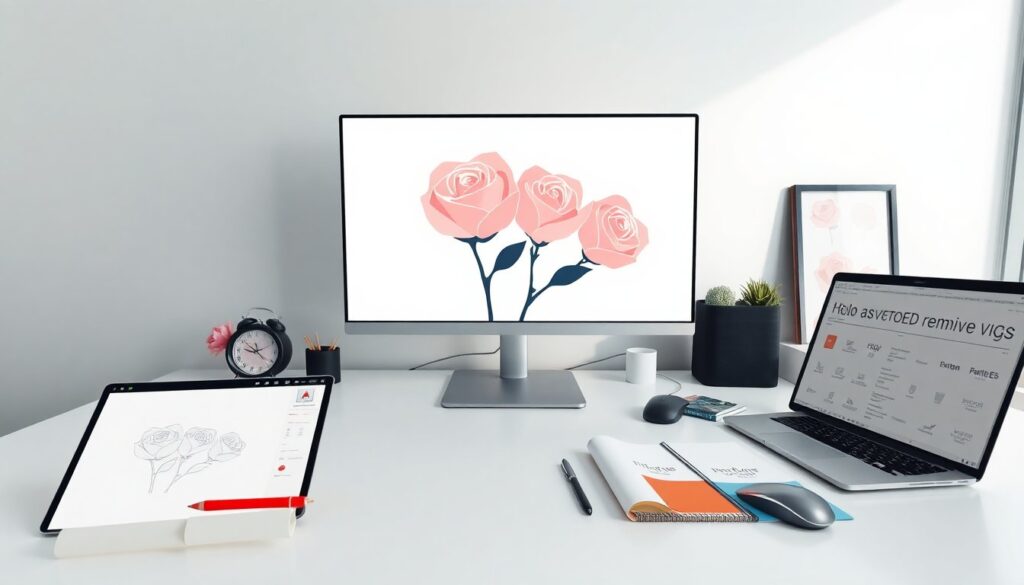
Lilting rose clip art holbodystic appears as a searchable phrase and as a focused design trend. The term describes stylized rose illustrations with soft motion and consistent geometry. This guide defines the style, shows common uses, explains licensing and file choices, and gives clear steps to create or change art. The reader will find simple, actionable directions and clear tool recommendations to make effective holbodystic rose clip art.
Key Takeaways
- Lilting rose clip art holbodystic combines flowing curves with structured shapes to create soft, modern rose illustrations that convey motion.
- This style suits packaging, web icons, invitations, and patterns, emphasizing clear outlines for legibility even at small sizes.
- Use licensed lilting rose clip art holbodystic files like SVG for web and EPS or PDF for print to ensure scalability and quality.
- Creating or customizing holbodystic rose art involves iterative sketching, vectorizing with consistent stroke weights, and testing at multiple scales.
- Recommended tools include Adobe Illustrator, Affinity Designer, and Inkscape for vector work, with Procreate or Krita for initial sketches.
- Maintain simplicity in shapes, limit colors, and use negative space to preserve the distinct holbodystic aesthetic and ensure design clarity across backgrounds.
What Is Lilting Rose Clip Art And The Holbodystic Aesthetic?
Lilting rose clip art holbodystic names a visual approach that pairs flowing curves with structured forms. Designers use the phrase to describe roses that suggest motion while keeping consistent shapes. The holbodystic aesthetic uses limited palettes, repeated motifs, and slight asymmetry to create a warm, modern look. Artists apply scale contrast and soft paths to suggest wind or sway. The style fits packaging, web icons, invitations, and pattern work. It emphasizes legible shapes and clean outlines so the clip art remains clear at small sizes and across backgrounds.
Common Creative Uses For Lilting Rose Clip Art
Designers place lilting rose clip art holbodystic on product labels, social posts, and email headers. Creatives use the art for repeat patterns, logos, and surface prints. They adapt the roses to stationery like greeting cards and wedding invites. Marketers pair the art with serif or rounded sans fonts to keep a soft but professional tone. Illustrators create sticker sheets and enamel pin mockups from the same assets. Developers use SVG versions of the clip art for responsive sites and apps where crisp resize matters.
Licensing, Attribution, And Best File Formats To Use
Buyers check license terms before they use lilting rose clip art holbodystic in products. They look for commercial rights and extended use if they plan to sell goods. Many sellers offer royalty-free licenses with limits on resale. Users who need modifications confirm they may edit the files. For web and UI, designers prefer SVG for scale and small file size. For print, they choose PDF or EPS with vector paths. For quick previews, PNG with transparent background works. They keep license text with the master file to avoid future disputes.
How To Create Or Customize Lilting Rose Clip Art
An artist starts by defining the rose silhouette and its motion. They sketch a few poses that show the stem and petals in simple curves. The artist picks two to four colors to keep the holbodystic look clear. They test the design at icon size and on large print. The process stays iterative: sketch, refine, vectorize, and test. When they customize existing art, they alter node positions, adjust fills, and keep stroke weights consistent. They document color codes and export settings for repeatable output.
Recommended Tools And Software For Holbodystic Illustrations
Illustrators use vector tools to make lilting rose clip art holbodystic that scales. Adobe Illustrator and Affinity Designer provide robust pen tools and clean boolean operations. Inkscape gives a free vector option with strong path controls. For digital sketches, artists use Procreate or Krita to explore forms before tracing. Web developers test SVGs in code editors like VS Code. For asset management, designers use simple libraries in Figma or Sketch. Plugins that export optimized SVG and generate variable color palettes speed production.
Step-By-Step Workflow: From Sketch To Vector And Export
Step 1: Draw quick pencil or tablet sketches of rose poses. Step 2: Choose one sketch and clean up the linework. Step 3: Trace the cleaned sketch in a vector app using the pen tool. Step 4: Simplify node counts and make smooth curves to suggest motion. Step 5: Add flat fills and two-tone shading for depth without gradients. Step 6: Group elements and set consistent stroke widths. Step 7: Export SVG for web and EPS/PDF for print. Step 8: Create PNGs at common sizes for previews.
Styling Tips To Achieve A Distinct Holbodystic Look
Keep shapes simple and readable to maintain the lilting rose clip art holbodystic feel. Use curved stems and slightly offset petals to suggest movement. Limit the palette to three main colors and one accent. Apply strokes to balance silhouette and avoid tiny details that vanish at small sizes. Use negative space to create petal separation rather than extra lines. Try repeating motifs with minor shifts in rotation or scale to build patterns. Test the design against light and dark backgrounds to ensure contrast and clarity.