
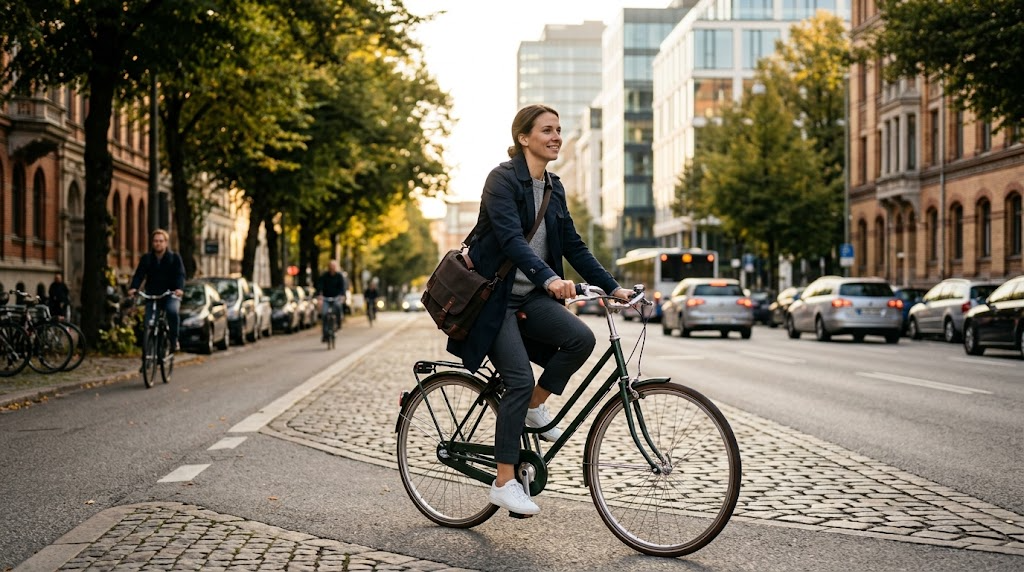
A traffic jam is an expensive way to stand still. You burn fuel, surrender minutes, and arrive at your desk having barely moved a muscle. A city bicycle changes that equation: the journey starts doing some of the work your gym membership was supposed to do. It will not suit every street or schedule, but on the right route, two wheels can give a weekday a surprisingly different shape.
Count the Costs You Do Not See
The price of driving is not written only on a fuel receipt. Parking, insurance, repairs, worn tires, and depreciation quietly follow the car home. A bicycle needs a lock, lights, maintenance, and sometimes rain gear. Still, its recurring bill is usually much lighter.
Imagine paying €8 each workday for fuel and parking. Eighteen commuting days cost €144. Set aside an illustrative €18 a month for bicycle wear and upkeep, and the gap is €126 — before accounting for the bike itself. Real savings depend on local prices and how many car trips actually disappear.
The budget changes through small absences:
- No fuel purchase for a journey made by pedal.
- Less paid parking near the office.
- Fewer short car trips and their associated wear.
- Possibly one less household car in the long run.
While some adults spend their extra disposable income on high-risk online entertainment like a crypto casino, others find that switching to a bike is a guaranteed way to keep a solid amount of money in their wallet each month.
Exercise Hidden in Plain Sight
Many people search for time to exercise while sitting through the time they already spend traveling. Cycling rearranges those hours. A 20-minute ride each way, five days a week, provides 200 minutes of movement. Whether all of it qualifies as moderate exercise depends on pace, terrain, and the rider.
The benefits of cycling can include stronger endurance, healthier cardiovascular function, and a steadier mood. It also gives desk workers a daily break from sitting. There is no need to race delivery riders: repeatable, comfortable effort is more useful than a heroic Monday followed by four exhausted mornings.
The Stopwatch Has Two Sides
A car wins a straight-line speed contest. A city commute is rarely a straight line. Traffic queues, hunting for a space, and walking from the car park belong in the calculation. So do a cyclist’s lock-up time, change of clothes, and possible shower.
To compare fairly, track:
- Door-to-door minutes, not dashboard speed.
- The difference between a calm Tuesday and rush hour.
- Time saved when the ride replaces separate exercise.
Cycling may beat driving over a short, congested route; a long or unsafe journey can reverse the result. Reliability often matters as much as speed.
A Smaller Shadow on the Street
A bicycle leaves no exhaust trail as it rolls past a cafe. Replacing a car trip can cut direct emissions, street noise, and parking demand. Building and maintaining bicycles still consumes resources, so “zero impact” would be fiction. The environmental advantage comes from the car journeys not taken, rather than simply owning a bike.
Better Work Starts Between Tasks
A ride can act as a doorway between roles. You reach the office awake rather than freshly frustrated by traffic; on the way home, unfinished emails have a chance to loosen their grip. That does not cure burnout. Workloads and recovery still need honest attention.
Teams can borrow the same principle: useful pauses are not wasted minutes. Try:
- A short screen-free reset after demanding meetings.
- A walking conversation instead of another sitting session.
- A quick mental distraction between complex tasks to reset focus.
Keep the Freedom, Not the Pressure
Start with two cycling days, choose quieter roads, and test the route before committing to a daily habit. Good lights, working brakes, visible clothing, and secure parking matter more than stylish equipment. A painted line is not always enough to make a hostile road safe. In bad weather or unsafe traffic, take public transport or drive.
The goal is not to turn commuting into a moral contest. It is to make an ordinary trip carry more value: fewer bills, more movement, cleaner streets, and perhaps a calmer beginning to the working day.